
Which Safety Messages Actually Belong on a Retail Floor?

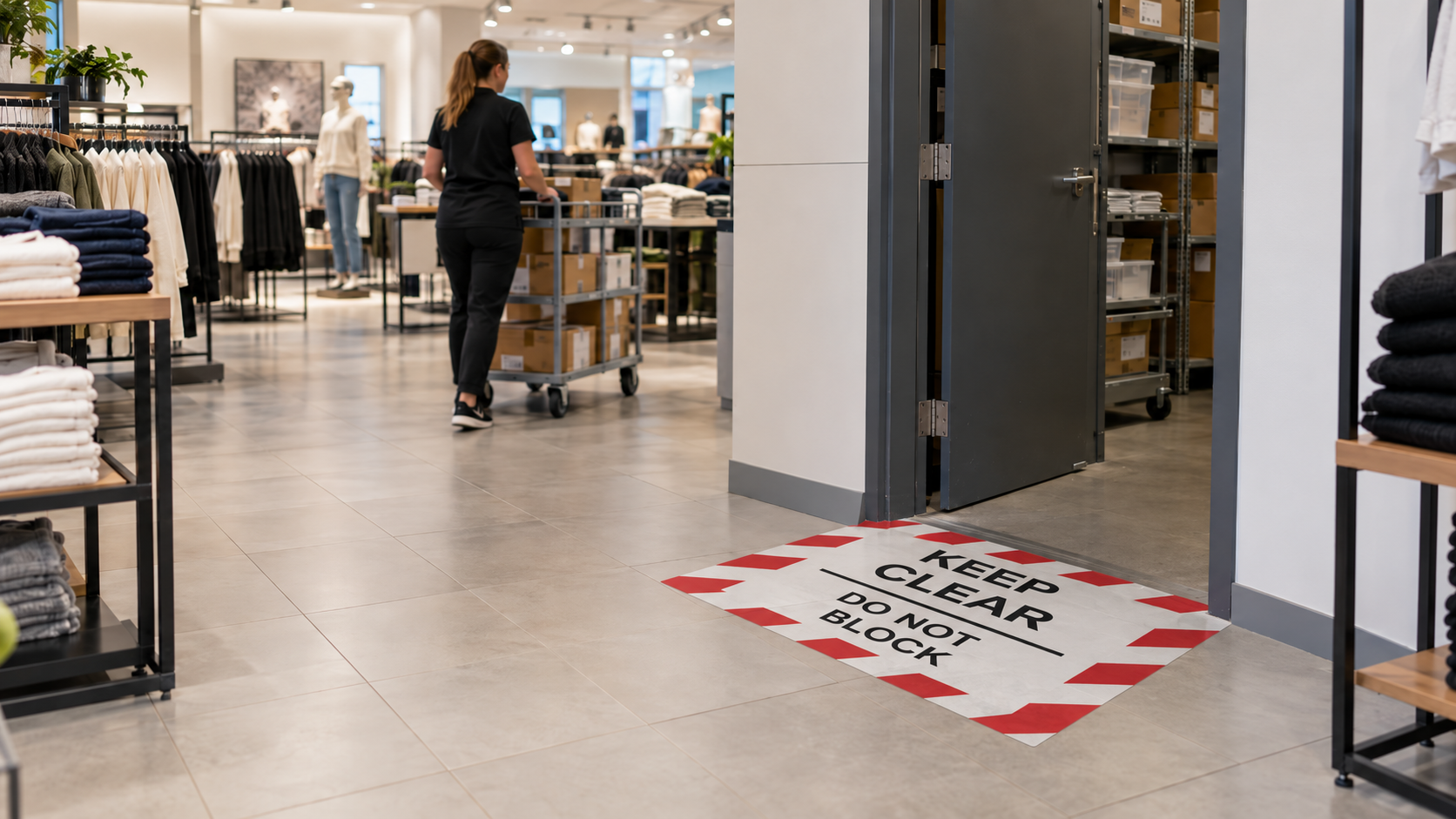
The most useful floor safety decals in retail stores communicate instructions such as KEEP CLEAR, DO NOT BLOCK, STOP, and EMPLOYEES ONLY. These markings help maintain access routes, identify restricted spaces, and guide employees moving between sales floors and stockrooms.
But not every shopping aisle needs a warning. The best floor signs address actual problems without creating unnecessary visual clutter.
5 Floor Safety Messages Worth Using in Retail Stores
1. KEEP CLEAR: Prevent Blocked Access
Retail stockroom entrances can become crowded during deliveries, restocking, and seasonal promotions.
Imagine a clothing store preparing for its holiday sale. Employees temporarily stack merchandise boxes near the stockroom doorway while preparing displays. Without a clearly identified storage boundary, the boxes may gradually obstruct the walkway.
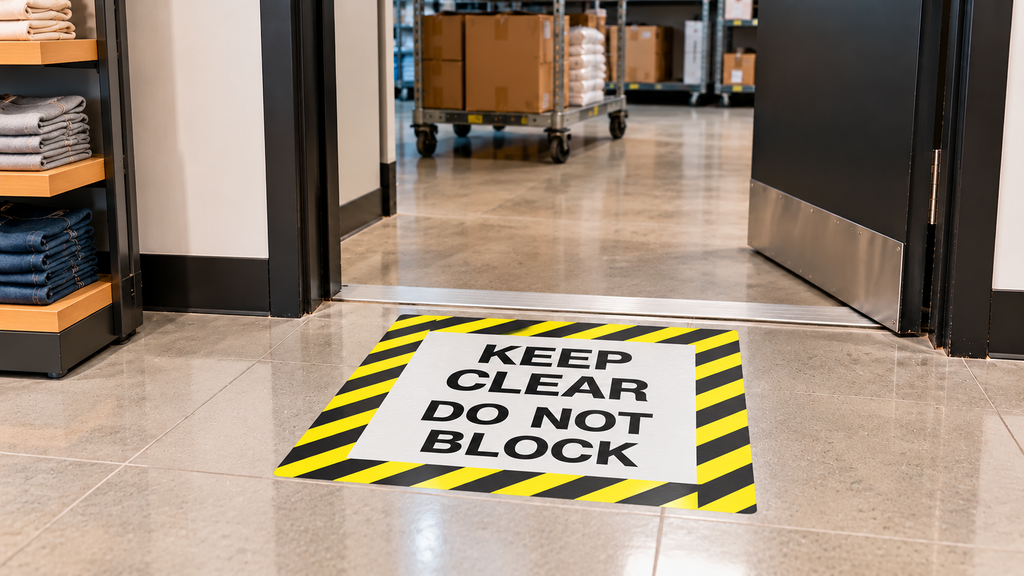
A KEEP CLEAR decal reinforces that the entrance must remain unobstructed.
Retailers can explore Keep Clear and Do Not Block floor signs in different sizes and styles for suitable access areas.
2. DO NOT BLOCK: Keep Emergency Equipment Accessible
Fire extinguishers, electrical panels, and emergency equipment require appropriate access.
A DO NOT BLOCK floor marking reminds employees not to leave carts, boxes, or merchandise displays in these areas.
These decals support good housekeeping practices but do not replace required clearances or other safety measures.
3. STOP: Manage Stockroom Traffic
Stockroom intersections can become busy when employees move merchandise carts between storage spaces and retail shelves.
A STOP decal reinforces a designated stopping point before entering a shared corridor.
For example, FloorSign’s 12-inch Standard Red STOP Floor Sign is a compact option to evaluate for employee-only locations.
However, a 12-inch sign is not automatically appropriate for every doorway. Managers should consider viewing distance, approach direction, available floor space, and whether carts could obstruct visibility. A larger marking may be easier to notice in wider corridors.
4. EMPLOYEES ONLY: Identify Staff Areas
Customers should be able to recognize areas intended for employees.
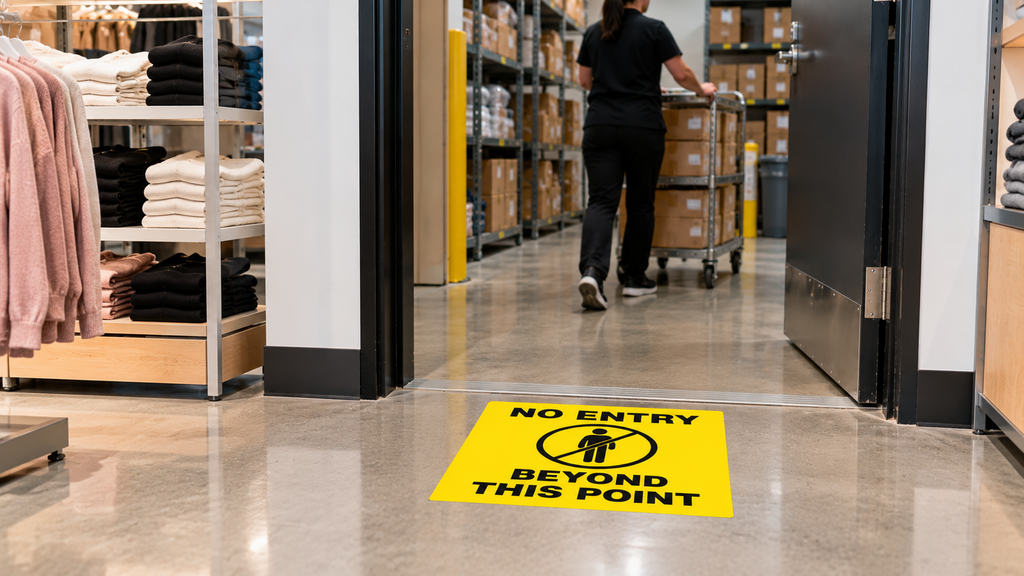
An EMPLOYEES ONLY marking can reinforce access restrictions at stockroom entrances and service corridors.
For locations requiring controlled access, combine floor messages with suitable doors, barriers, or eye-level signs.
5. CAUTION: Identify Specific Hazards
CAUTION decals may be appropriate where ongoing operational hazards require attention, such as employee service areas with frequent equipment movement.
For temporary spills or wet floors, portable warning signs and prompt cleanup are generally more appropriate than permanent adhesive markings.
Where Should Retail Stores Place Floor Safety Decals?
Each message should appear where employees or customers need to recognize an instruction.
| Retail location | Suggested message | Purpose |
| Stockroom doorway | KEEP CLEAR | Prevent blocked access |
| Emergency equipment area | DO NOT BLOCK | Reinforce equipment accessibility |
| Stockroom intersection | STOP | Identify a stopping point |
| Employee service entrance | EMPLOYEES ONLY | Identify restricted access |
| Equipment movement area | CAUTION | Warn about a specific hazard |
Place decals before the point where action is needed. A STOP sign positioned before a stockroom crossing gives employees an opportunity to respond before entering the shared route.
How to Choose the Right Floor Safety Decals
Retail managers should consider three factors before installing floor signs.
- Clear messaging: Choose short instructions that explain exactly what people should do.
- Floor compatibility: Confirm that the decal’s adhesive and slip-resistance characteristics suit the store’s tile, vinyl, or finished concrete.
- Visibility: Select a suitable size based on viewing distance, surrounding displays, and normal employee movement.
For example, a compact STOP decal may suit a narrow staff corridor if it remains clearly visible. Wider intersections or visually busy areas may require larger markings or additional controls.
Don’t Turn Every Retail Aisle Into a Warning Zone
Too many floor messages can make important warnings harder to notice.
A small boutique may only need markings around its stockroom and emergency access areas. A larger department store with frequent merchandise deliveries may also benefit from designated stopping points for employee carts.
The goal is not to install more signs. It’s to communicate the right instruction in the right place.
Inspect existing markings regularly and replace decals that become damaged, loose, or difficult to read.
Make Every Safety Message Count
Effective retail floor safety starts with identifying real risks.
Review stockroom entrances, emergency access points, and employee traffic intersections. Determine which locations need clearer instructions, then select suitable markings.
A few carefully placed floor safety decals can reinforce safer daily operations without overwhelming the shopping environment.
Frequently Asked Questions
1. Which floor safety decals are most useful in retail stores?
KEEP CLEAR, DO NOT BLOCK, STOP, and EMPLOYEES ONLY are useful messages for many retail environments. Their importance depends on store layout and operations. Retailers should prioritize locations where merchandise storage, employee traffic, or access restrictions create a need for clear instructions.
2. Where should retail floor safety decals be installed?
Install decals where people need to recognize an instruction before entering an area. Common locations include stockroom entrances, employee traffic intersections, and emergency equipment access points. Markings should remain visible during normal operations and should not be routinely covered by merchandise or carts.
3. Can floor safety decals be used on retail tile?
Yes, provided the decal is compatible with the flooring material. Adhesive performance depends on the tile finish, surface preparation, and cleaning methods. Retailers should review manufacturer specifications and confirm that the product is suitable for expected pedestrian traffic.
4. How often should retail floor safety decals be replaced?
Replace decals when they become loose, damaged, difficult to read, or potentially hazardous. Service life varies with foot traffic, cleaning practices, and floor conditions. Regular inspections help ensure markings remain visible and suitable for their intended locations.